Generalization by Composition: Primitives for Robot Control

Invited Talk / Dartmouth Autonomy Seminars

Avik De

Adjunct Associate Professor, Electrical and Systems Engineering, University of Pennsylvania
Chief Science Officer, Ghost Robotics
Nov 2026

Intelligence in Motor Skills

What is intelligence?

Applications of intelligence

I like to talk about intelligence having two parts, an athletic part and a cognitive part.

— Marc Raibert

RL With Fine-Grained Actions

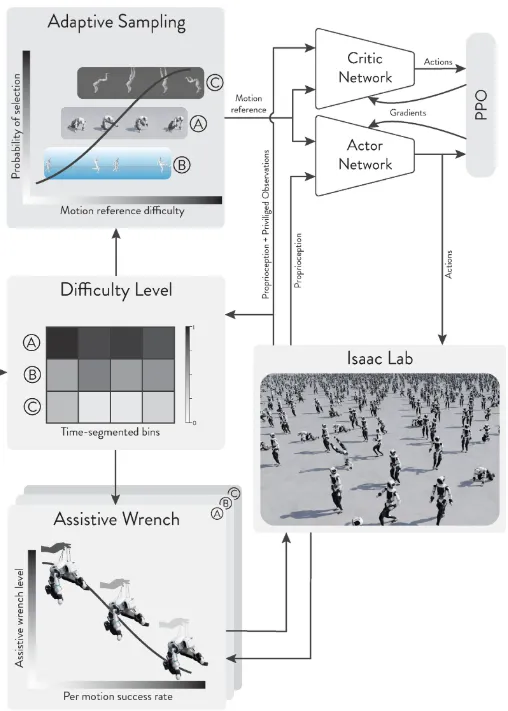
ZEST uses residual joint-space corrections to reference positions with a fixed impedance controller [@sleiman2026zest]
ZEST uses residual joint-space corrections to reference positions with a fixed impedance controller (Sleiman et al., 2026)

RL facilitates flexible, robust, embodied intelligence, but is weak at generalization

Task, Embodiment Generalization in Foundation Models
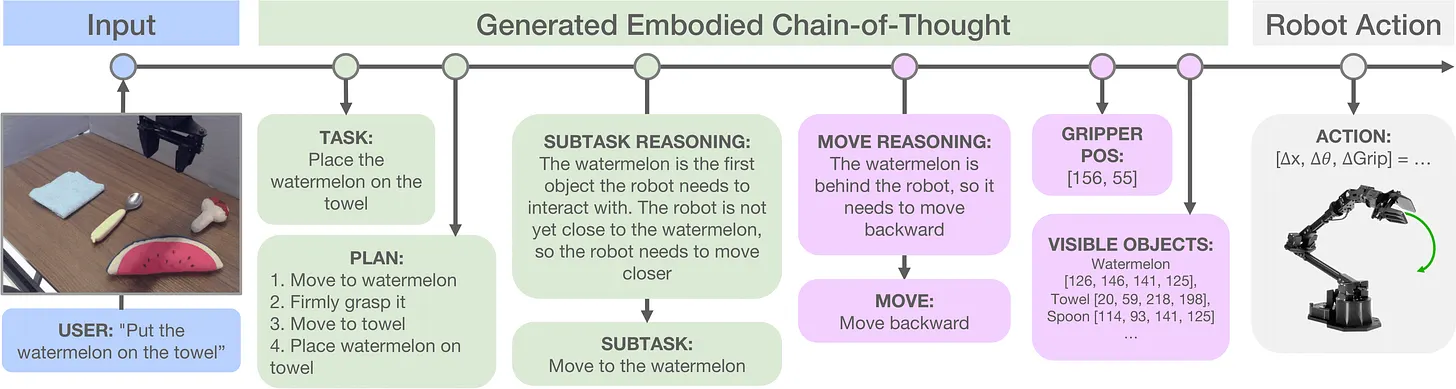
pi0.7 uses a scratchpad for subtask reasoning [@intelligence2026pi]
pi0.7 uses a scratchpad for subtask reasoning (Intelligence et al., 2026)
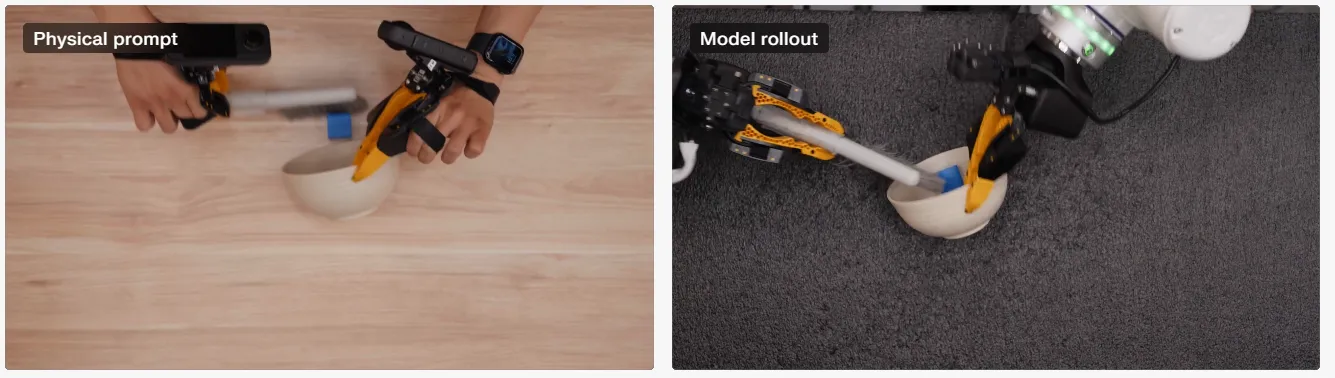
GEN-1.5 in-context learning for generalization to new tasks

Task generalization

Observed:

  • Sequential task composition
  • Text-based subtask generation
  • In-context learning (ICL)

Embodiment generalization

  • Tool improvisation
  • Large-scale cross-embodiment pretraining*

Missing: RL’s robustness!

Extrapolation (“Jump”) is Not Solved

No systematicity
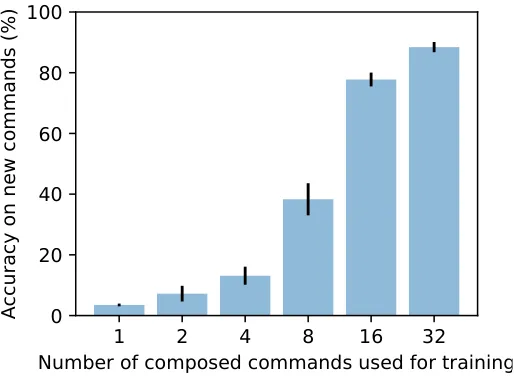
Composed examples needed for combined commands [@lake2018generalization]
Composed examples needed for combined commands (Lake & Baroni, 2018)

RNNs need training examples in context

Test-time extrapolation
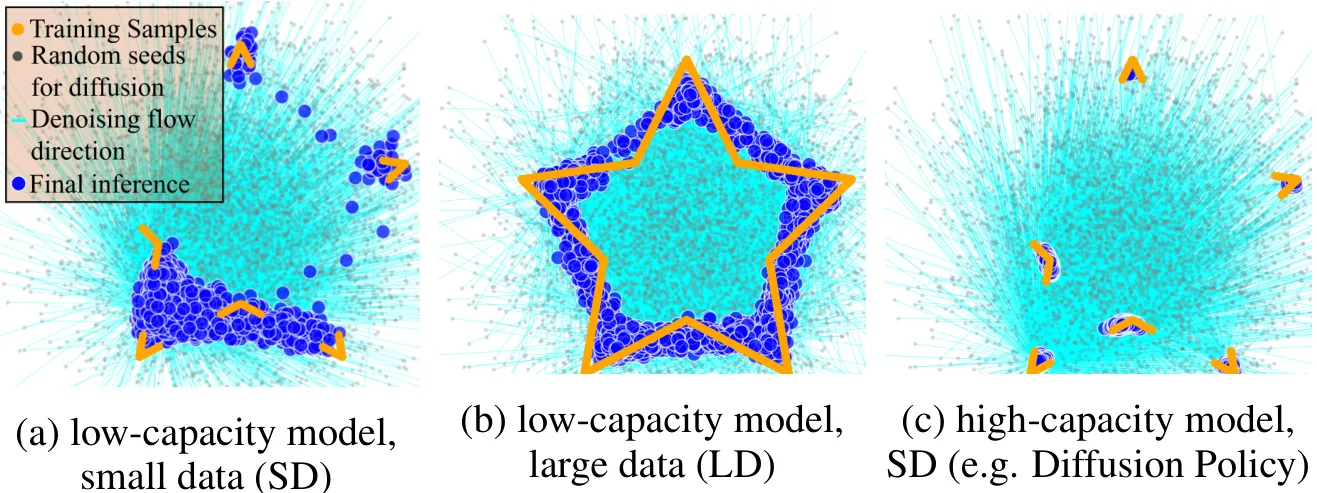
Test-time extrapolation of diffusion policies, ACT [@he2026demystifying]
Test-time extrapolation of diffusion policies, ACT (He et al., 2026)

Diffusion policies, ACT behave like lookup tables or interpolators, with poor OOD results

LLMs can’t jump
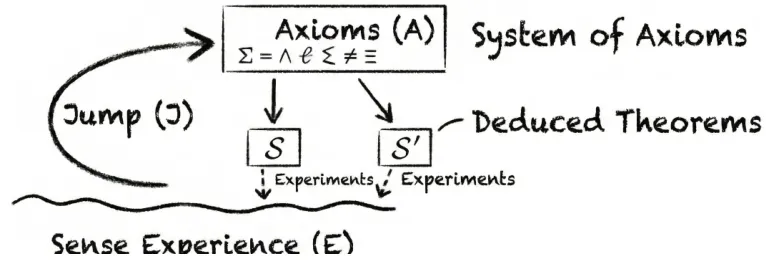
Einstein's Experience -> Jump -> Action Diagram [@zahavyposition]
Einstein’s Experience -> Jump -> Action Diagram (Zahavy, 2026)

LLMs cannot form novel hypotheses (“jumps”) when there is no error signal gradient for hillclimbing

Adaptation is Not Solved

Continual learning
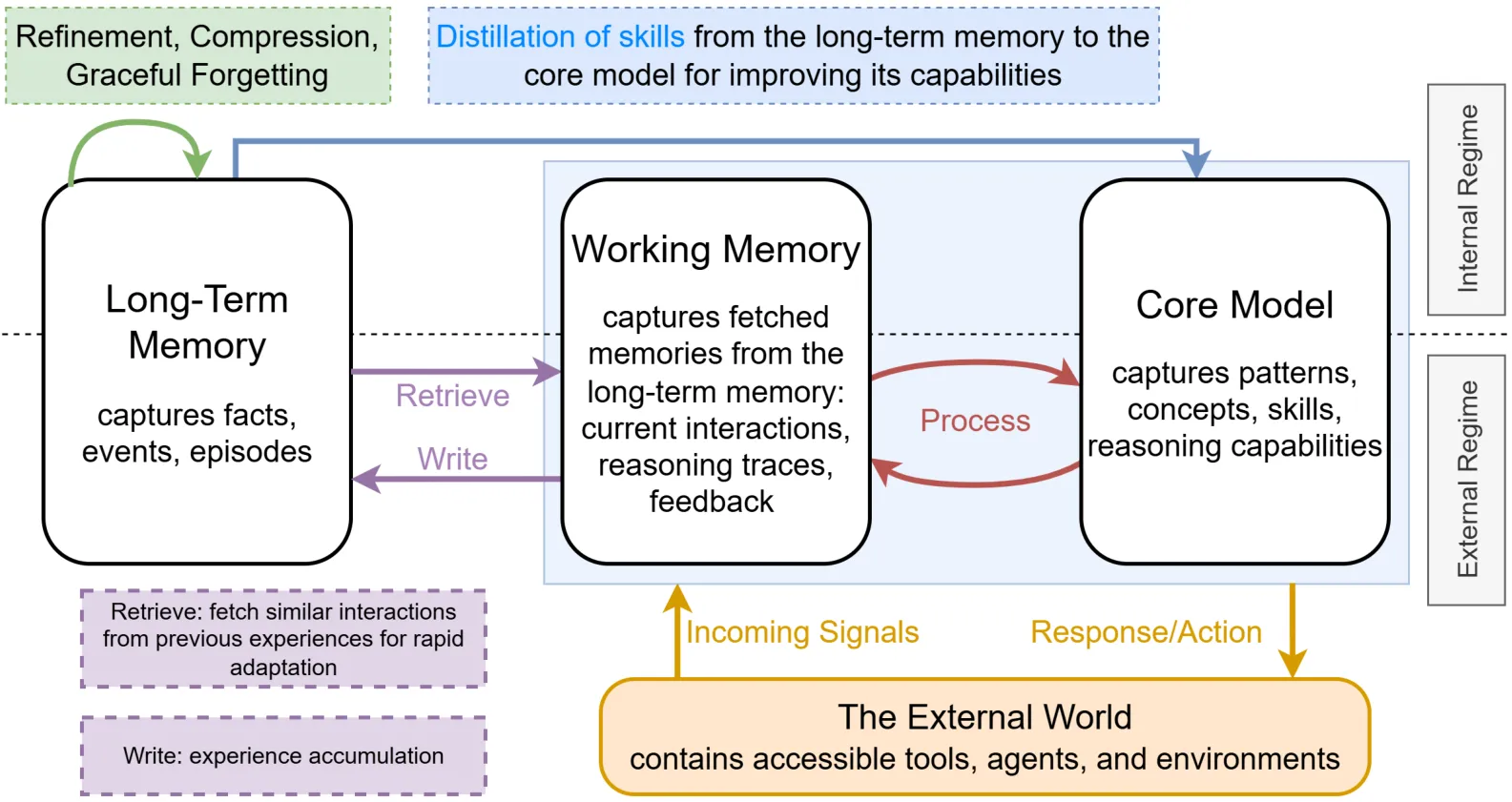
Modular memory architecture  [@dorovatas2026position]
Modular memory architecture (Dorovatas et al., 2026)

We cannot yet continuously acquire new skills without catastrophic forgetting (IWL) or blowing up inference compute (ICL)

Disturbance rejection
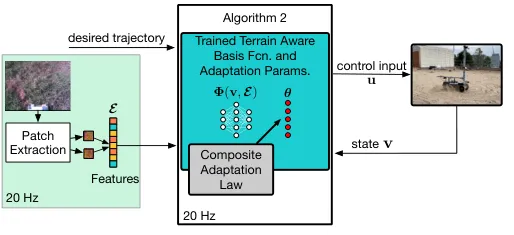
"Last layer" adaptation [@lupu2024magic]
“Last layer” adaptation (Lupu et al., 2024)
  • Terrain/environment robustness poor
  • Loops and hierarchies acting at different time-scales are key to online adaptation

What Biology does
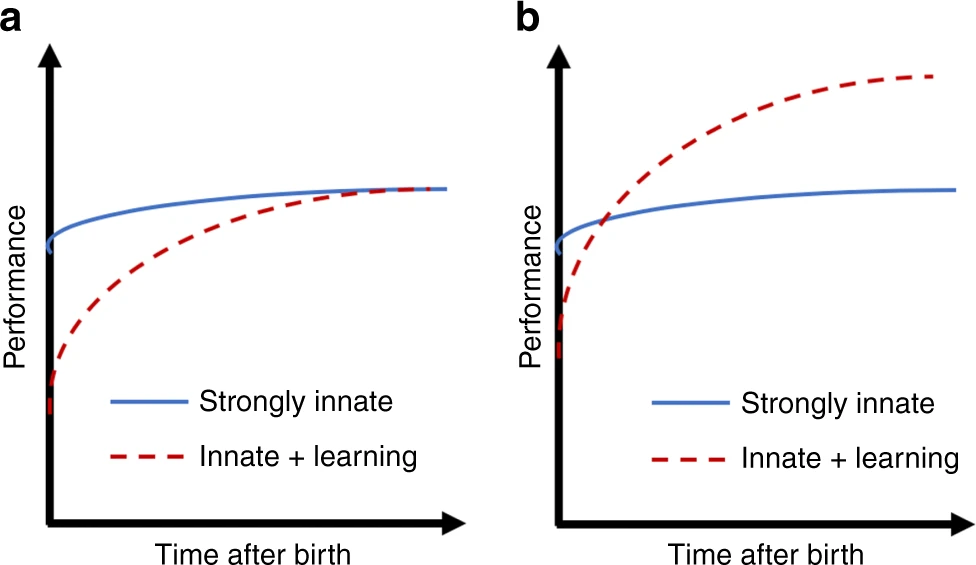
The species relying on a strongly innate strategy will outcompete the species employing a mixed strategy [@zador2019critique]
The species relying on a strongly innate strategy will outcompete the species employing a mixed strategy (Zador, 2019)

Animals are able to function well so soon after birth because they are born with highly structured brain connectivity

Building Machines That Learn, Think, and Move Like People

What kind of structure?
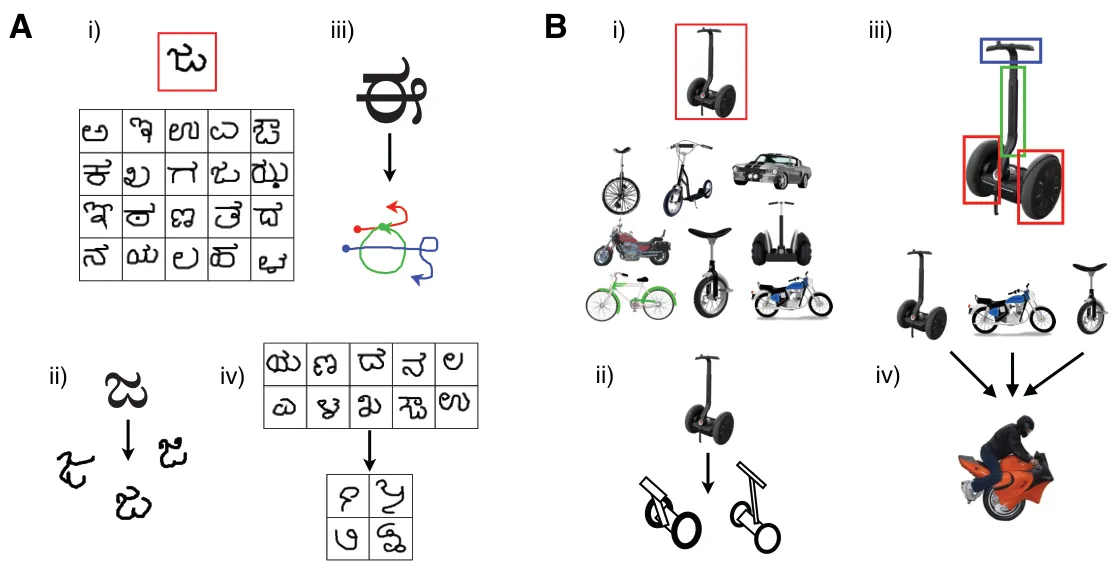
Pattern-recognition scaling vs. compositional, modular causal models (and physics/motor primitives) for sample-efficient generalization  [@lake2016building]
Pattern-recognition scaling vs. compositional, modular causal models (and physics/motor primitives) for sample-efficient generalization (Lake et al., 2017)

Literally instantiated

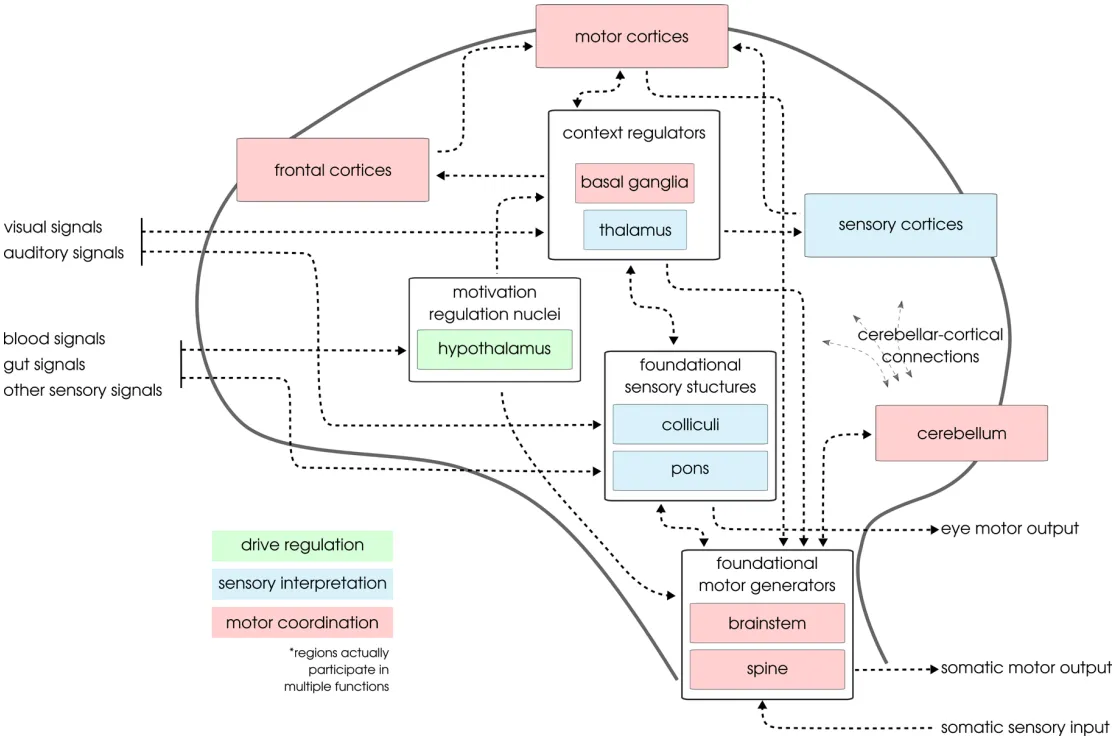
Modular, hierarchical organization of biological motor systems (spinal primitives, brainstem loops, cortical planning) [@merel2019hierarchical]
Modular, hierarchical organization of biological motor systems (spinal primitives, brainstem loops, cortical planning) (Merel et al., 2019)

Is it because Biology just doesn’t have powerful enough computers?

Computational Challenges are Not Solved

Training complexity
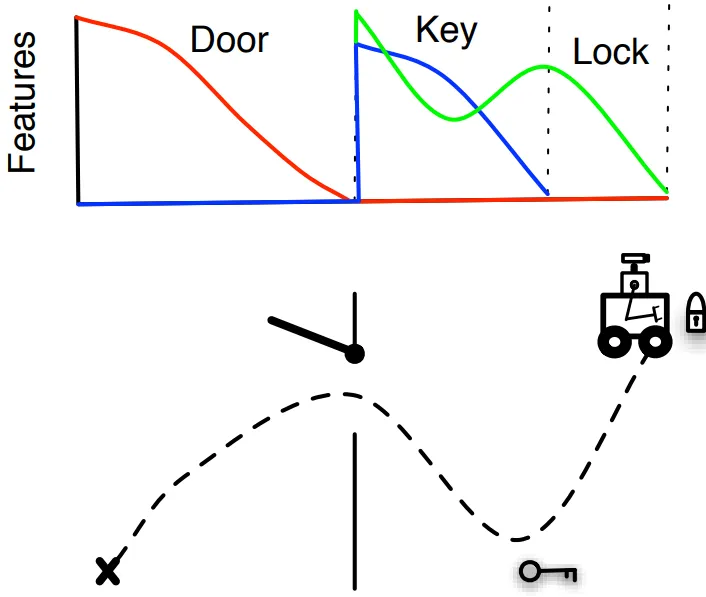
Constructing Skill Trees [@konidaris2012robot]
Constructing Skill Trees (Konidaris et al., 2012)

O(N_\text{skills}) vs. O(N_\text{sequences}) demonstrations with explicit composition

Exponential scaling
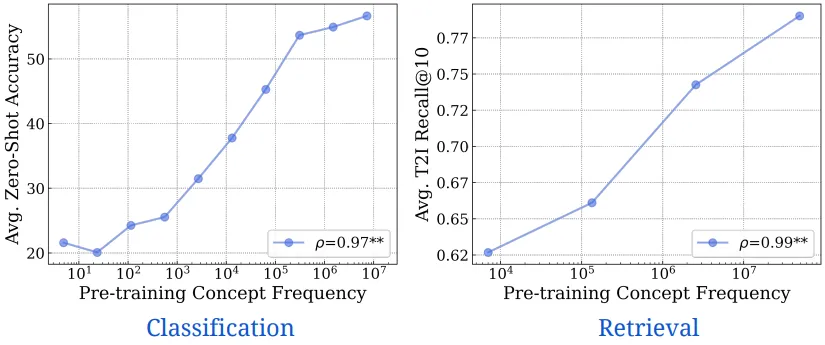
Linear improvements in downstream "zero-shot" capability require exponentially more pretraining data on those concepts [@udandarao2024no]
Linear improvements in downstream “zero-shot” capability require exponentially more pretraining data on those concepts (Udandarao et al., 2024)

Outline

Thesis

An intelligence architecture should be generative, adaptive, efficient, and embodied — able to understand and use the body’s dynamics, synthesize novel behaviors, and efficiently adapt to new tasks and environments.

Organization

  1. Introduction
  2. The Case For Dynamical Action Primitives

  3. Building Composable Action Primitives
  4. Open Questions

The Case For Dynamical Action Primitives

An Analogy: Tokens in LLMs

Strategies for grouping bytes into patches [@pagnoni2025byte]
Strategies for grouping bytes into patches (Pagnoni et al., 2025)

Vocabulary size / token size tradeoff

Letters (fine) vs. words (coarse)

  • Memory: higher for coarse tokens
  • Computation: longer sequences for fine tokens
  • Generation: sequences of words vs. letters
  • Transfer: coarse are task-specific, but transfer better

E.g. medical journal, English-Italian dictionary
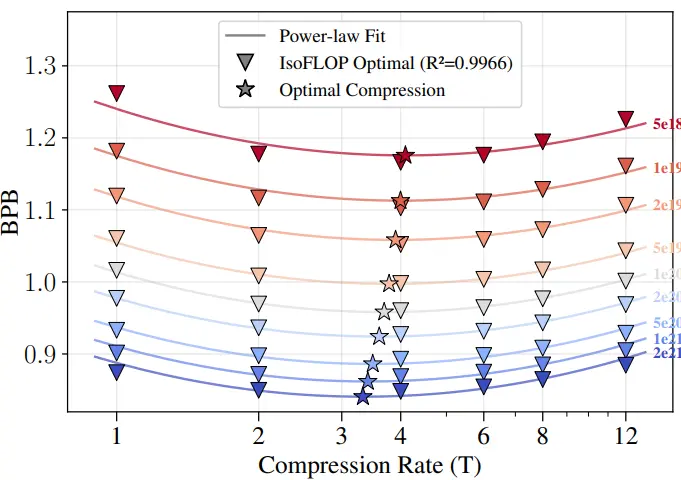
Loss (BPB) vs. bytes/token (compression rate) shows an optimum at each training budget [@limisiewicz2026compute]
Loss (BPB) vs. bytes/token (compression rate) shows an optimum at each training budget (Limisiewicz et al., 2026)

Animals Exhibit Coarse Action Primitives
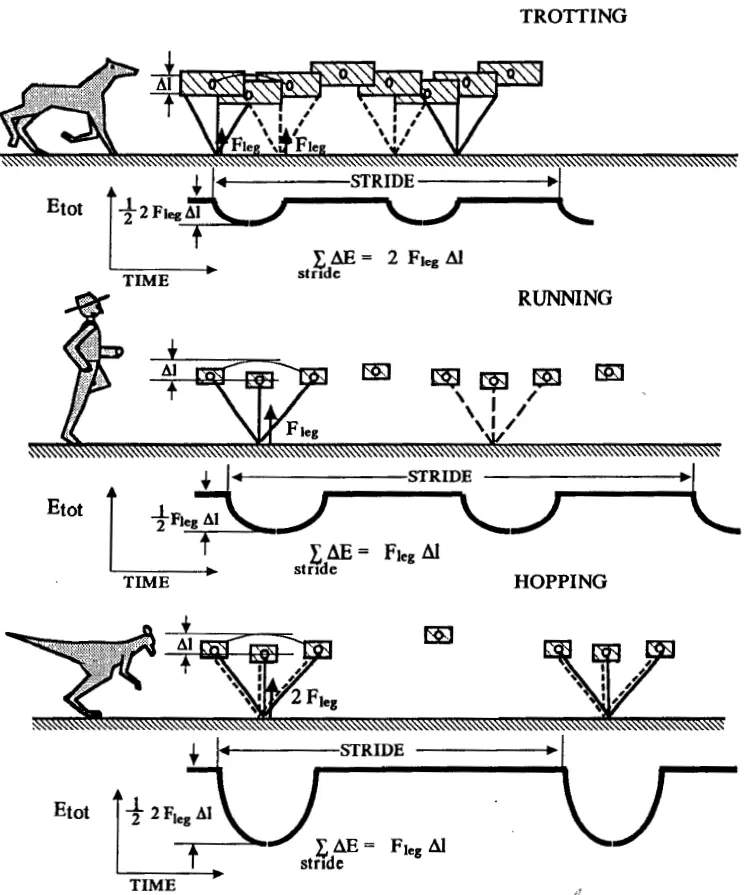
Bouncing like a monopode [@blickhan1993similarity]
Bouncing like a monopode (Blickhan & Full, 1993)
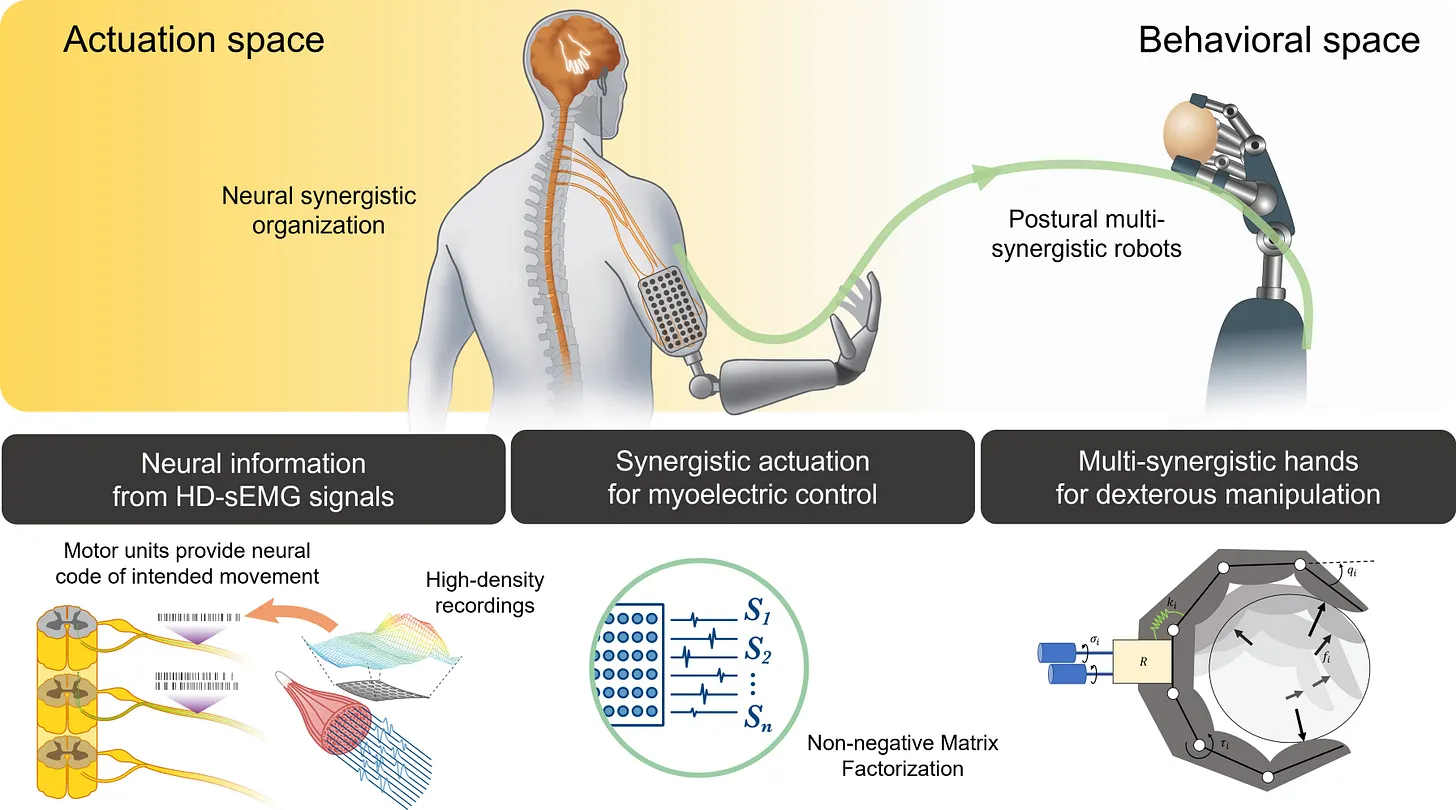
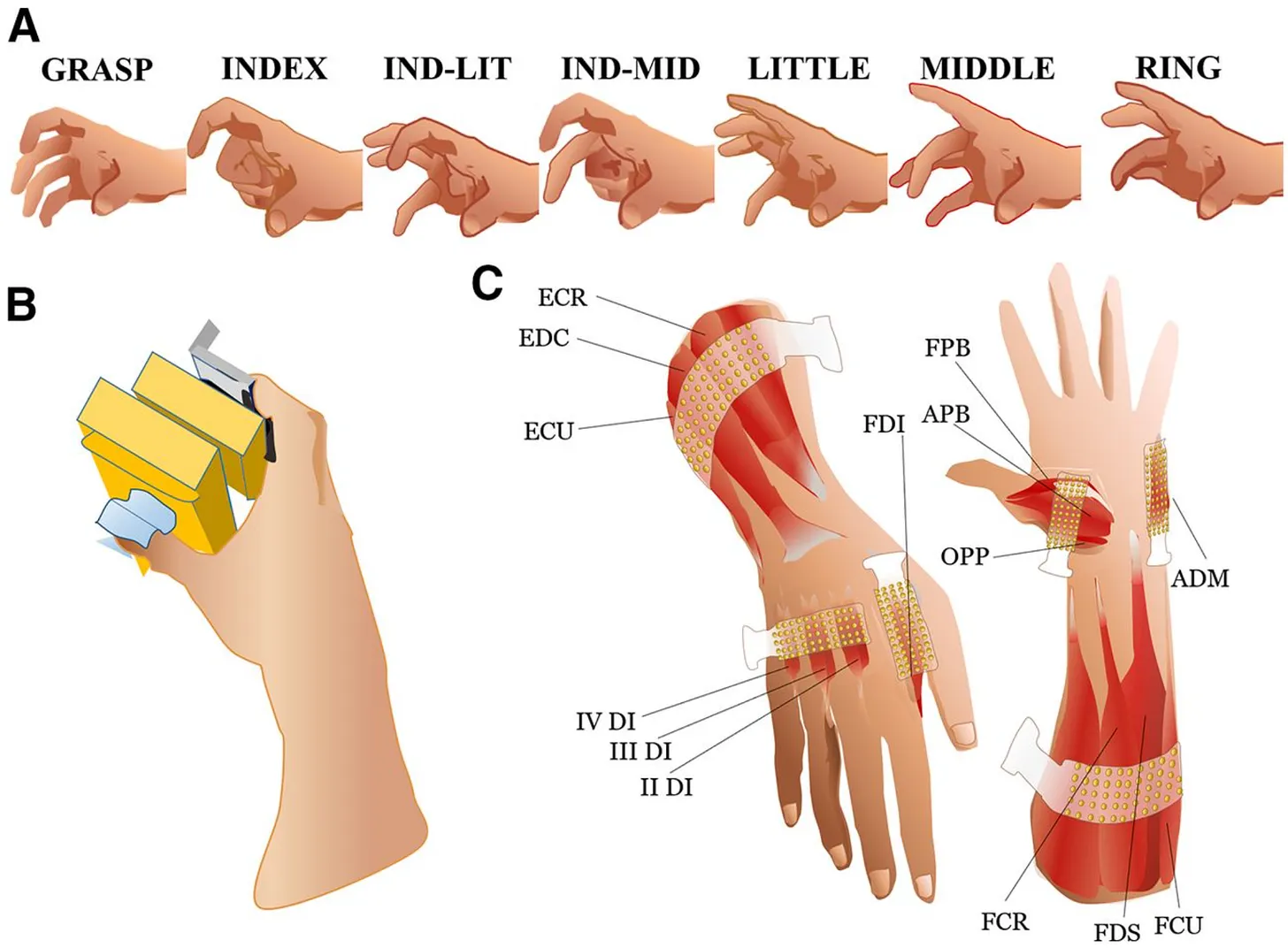
Neural decoding of synergistic behavior of spinal motoneurons [@capsi2025merging]
Neural decoding of synergistic behavior of spinal motoneurons (Capsi-Morales et al., 2025)
Motor neuron activities exhibit a synergistic organization in complex tasks; large dimensionality reduction in motor neuron outputs [@tanzarella2021synergistic]
Motor neuron activities exhibit a synergistic organization in complex tasks; large dimensionality reduction in motor neuron outputs (Tanzarella et al., 2021)

Learned Models Exhibit Coarse Action Primitives
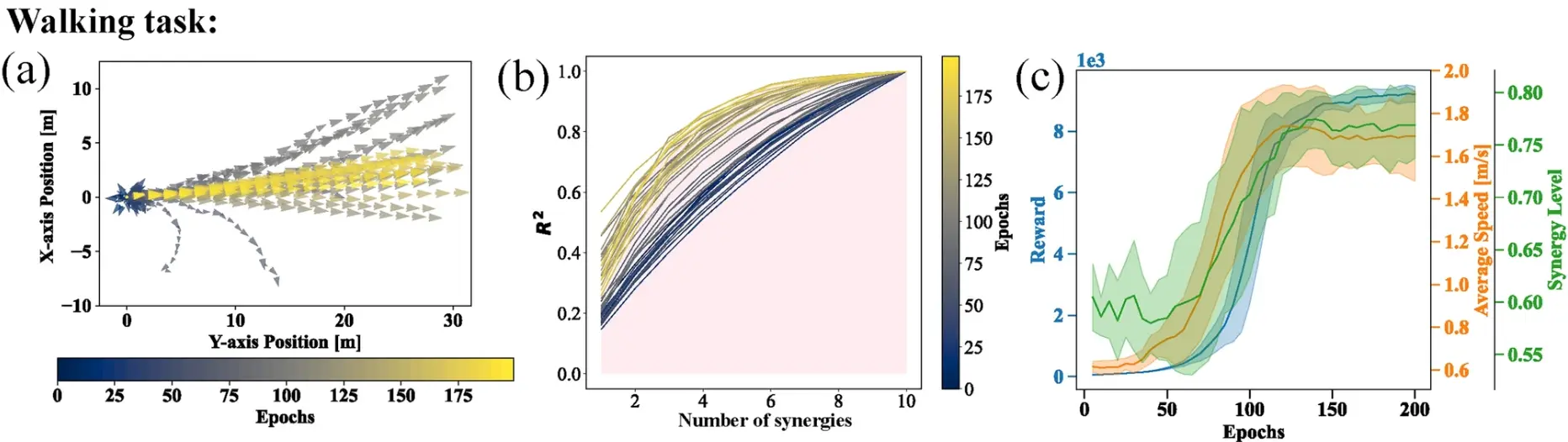
With only energy and the motor performance in the reward, synergies (via PCA on joint torques) emerge [@li2025motor]
With only energy and the motor performance in the reward, synergies (via PCA on joint torques) emerge (Li & Hayashibe, 2025)
Learning planning abstractions in sequential decision-making domains from language-annotated demonstrations [@liu2024learning]
Learning planning abstractions in sequential decision-making domains from language-annotated demonstrations (Liu et al., 2024)

What We Want: Dynamical Primitives

Fish with no active control [@beal2006passive]
Fish with no active control (Beal et al., 2006)

Embrace dynamics

  • Kangaroo hopping vs. human running need different strategies
  • Unconventional robot designs
  • Highly dynamic behaviors like gymnastics
  • Mechanical intelligence is invisible when training from video data

Dynamical stability and robustness

Cannot learn from imitation/pre-training!

What We Want: Explicit Sequential Composability
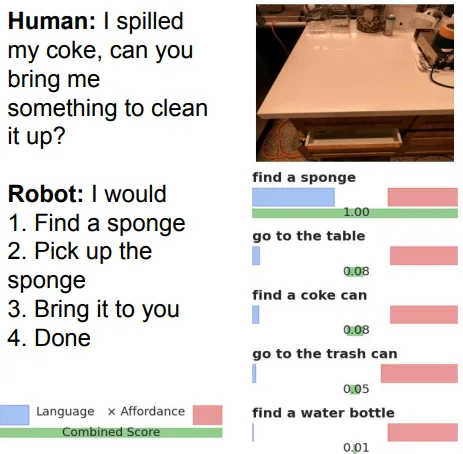
  • “Emergent” language-driven sequencing -> explicit, guaranteed, and dynamical sequential composition
  • Dynamics pose correctness challenges: e.g. walk -> long jump not feasible; walk -> run -> long jump is

What We Want: Explicit Parallel Composability
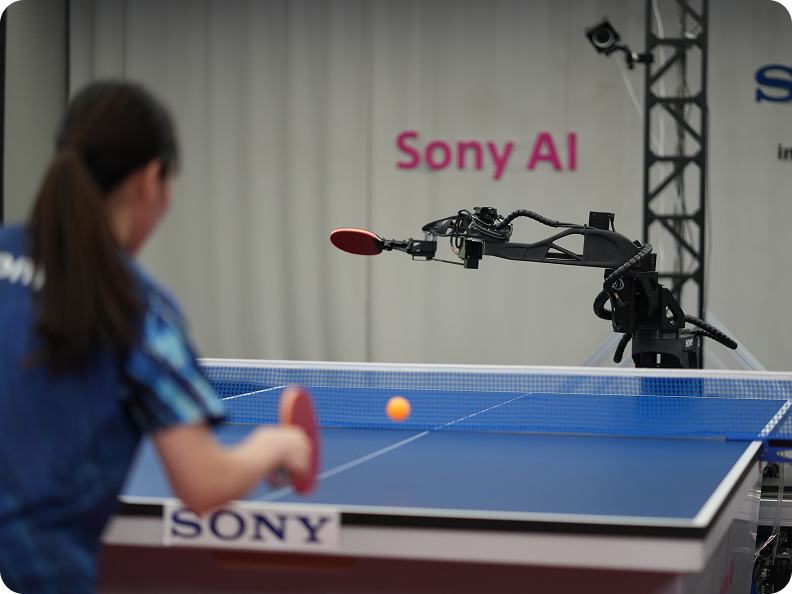
Sony Ace elite-level table tennis robot [@durr2026outplaying].
Sony Ace elite-level table tennis robot (Durr et al., 2026).
  • E.g. combine upper and lower-body skills
  • Poses similar dynamic stability challenges

Building Composable Action Primitives

Formal Sequential Composition using Dynamical Models

“Buegler” robot palming, catching, juggling (Burridge et al., 1999)
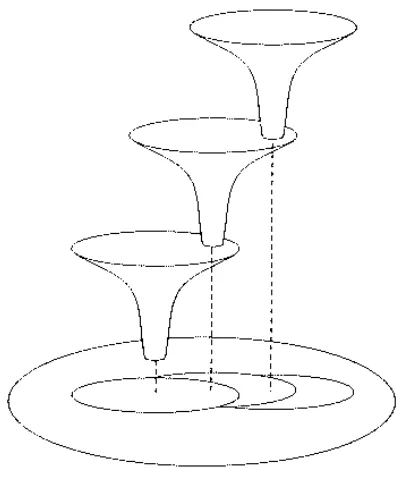
  • Formal guarantee of composability
  • Idea: each controller’s goal state inside domain of attraction of next

Empirical Dynamical Parallel Composition

“Control in 3 parts” (Raibert, 1986)

  • Control of hopping height
  • Control of forward speed
  • Control body attitude

Specific to a particular type of design – would not work with a high-inertia leg.

Formalized Parallel Composition for Tailed Hopping
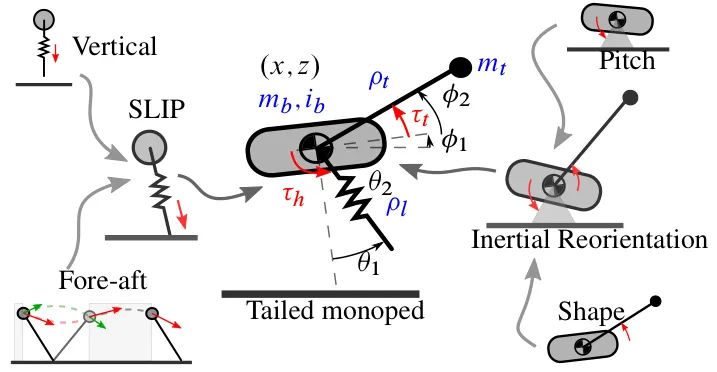
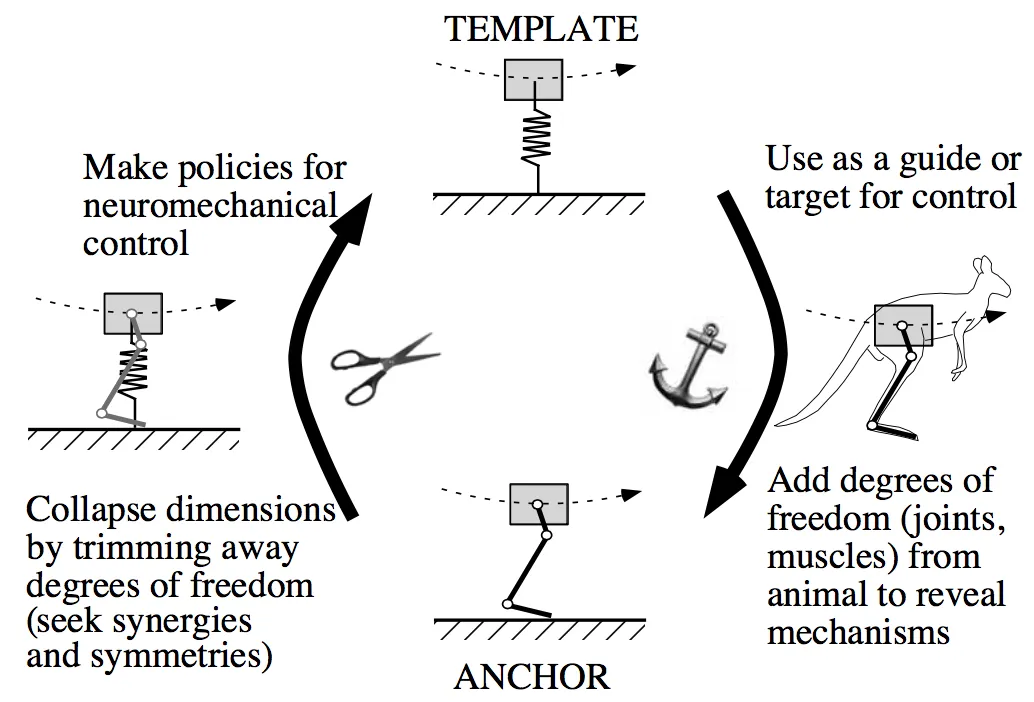
Template-based control

  • Projection: p_T = \Pi(p)
  • Template dynamics: \dot x_T = f(x_T, u_T; p_T)
  • Anchoring (controller embedding): u = \Pi^\dagger(u_T)

Minitaur Vertical Hopping Compositions
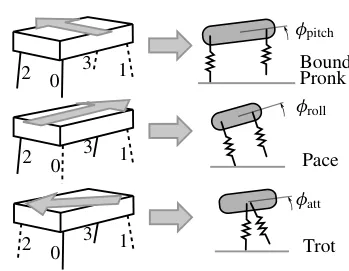
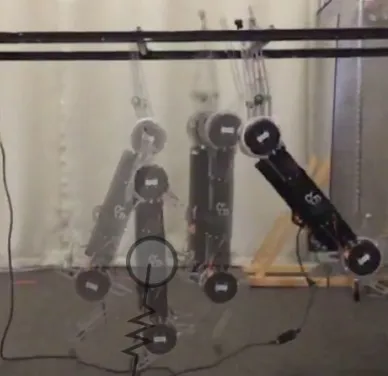
Virtual biped permutations [@de2018vertical]
Virtual biped permutations (De & Koditschek, 2018)
  • Decoupled, decentralized control + mechanical coordination
  • Embodiment transfer between Minitaur/Jerboa (different projection & embedding)
  • Task transfer (generate different gaits)

Minitaur Vertical Hopping Model-Robustness

Robust to modeling errors

  • \alpha non-dimensionalized parameters varied \sim 10 \times
  • Similar to RL with aggressive domain randomization
  • Weakness of model-based optimal control methods

Why does it work?

  • Simplicity of f and the (lack of) sensitivity of the \Pi function
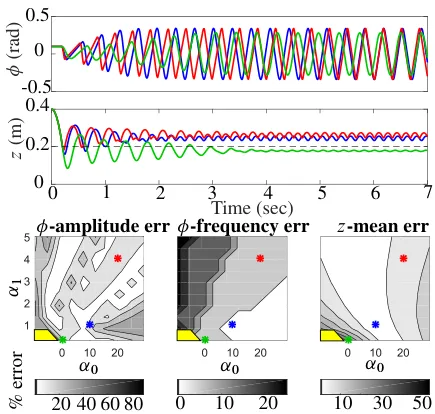
Parametric robustness [@de2018vertical]
Parametric robustness (De & Koditschek, 2018)

“Correct By Design”: Hybrid Averaging
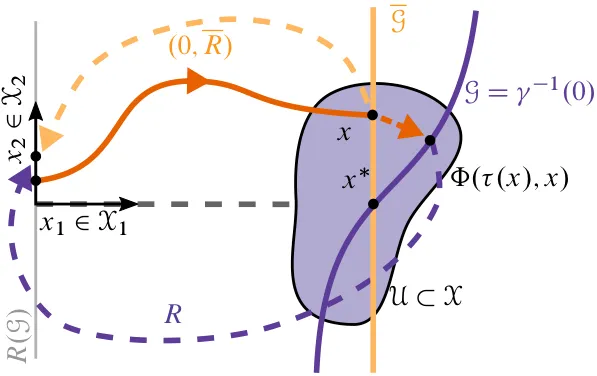
Hybrid averaging theory to find asymptotic behavior of composed cyclic systems [@de2018hybrid]
Hybrid averaging theory to find asymptotic behavior of composed cyclic systems (De et al., 2018)
  • Analytically: Reduce complex behaviors to simple ones
  • Synthetically: Allows empirical composition to work

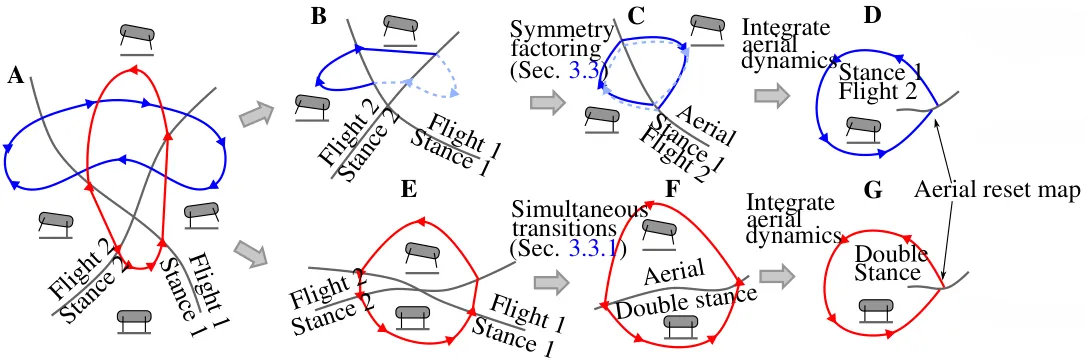
“Correct By Design”: Time-Reversal Symmetry
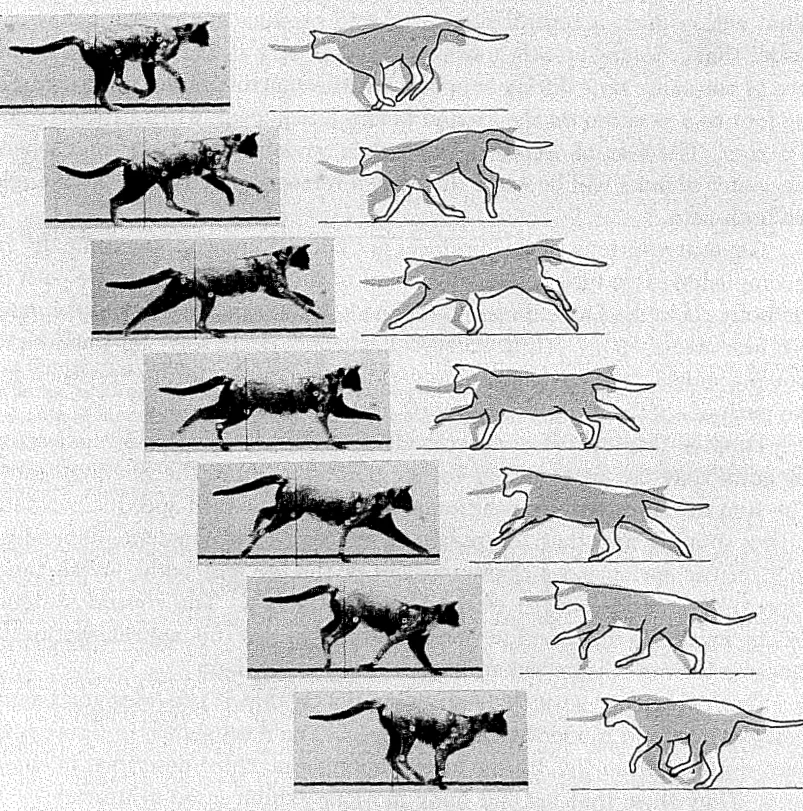
Gallopping cat image from [@raibert1986legged]
Gallopping cat image from (Raibert, 1986)

Dimension reduction using time-reversal symmetry complements averaging.

Hierarchical Control Modularity

Subsumption architecture [@brooks1991intelligence]
Subsumption architecture (Brooks, 1991)
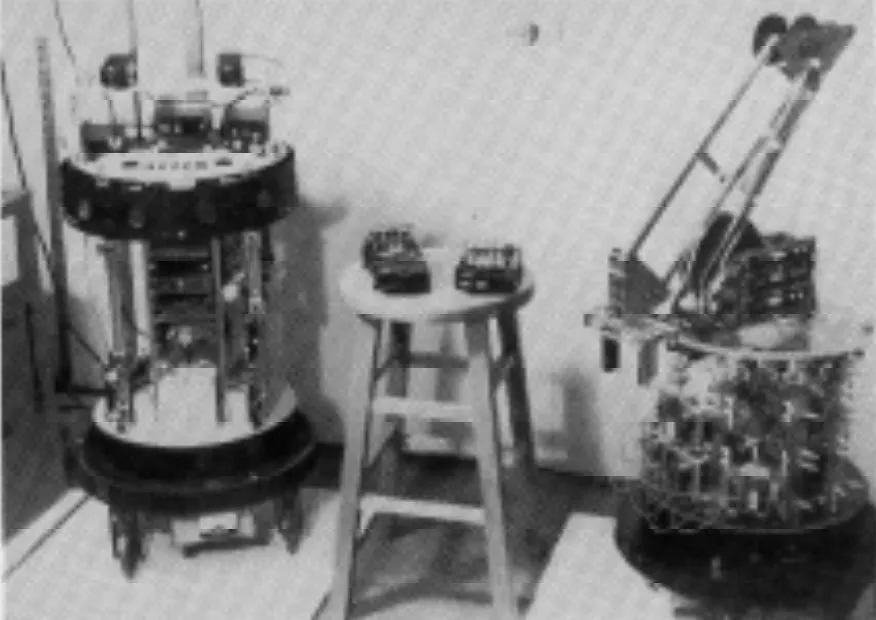
Template and anchors to describe the behavior of animals and robots [@full1999templates]
Template and anchors to describe the behavior of animals and robots (Full & Koditschek, 1999)
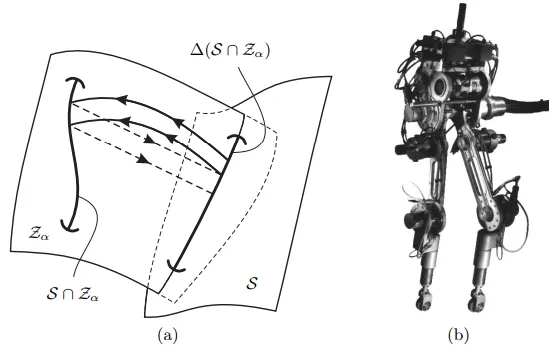
Hybrid Zero Dynamics formalism of dimension reduction with posture control [@westervelt2003hybrid].
Hybrid Zero Dynamics formalism of dimension reduction with posture control (Westervelt et al., 2003).
  • Alternative to a Sense -> Plan -> Act, or a linear VLA architecture
  • Explicit hierarchies facilitate multi-timescale control, embodiment transfer

Center-of-Mass (CoM) Primitives Guaranteed to Appear
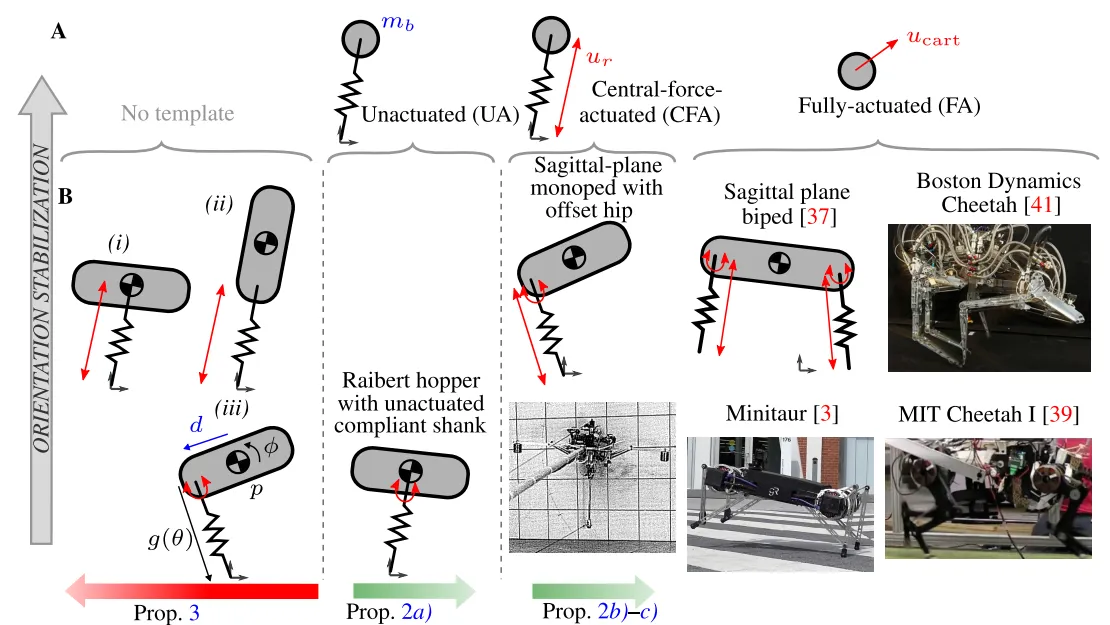
In low-dimensional sagittal-plane models, posture control results in necessary dimension reduction to a specific form of CoM dynamics
[@de2022mode]
In low-dimensional sagittal-plane models, posture control results in necessary dimension reduction to a specific form of CoM dynamics (De et al., 2022)

Embed CoM Primitive Task Controller

Mode-reactive templates [@de2022mode]
Mode-reactive templates (De et al., 2022)
Analysis:  Full model        ->    postural dimension reduction    ->       CoM dynamics
Synthesis: Robot control     <-           posture control          <-   CoM task control

“Automated” \Pi function in certain settings

Inverse Dynamics Action Primitive: MPC for RoboBee
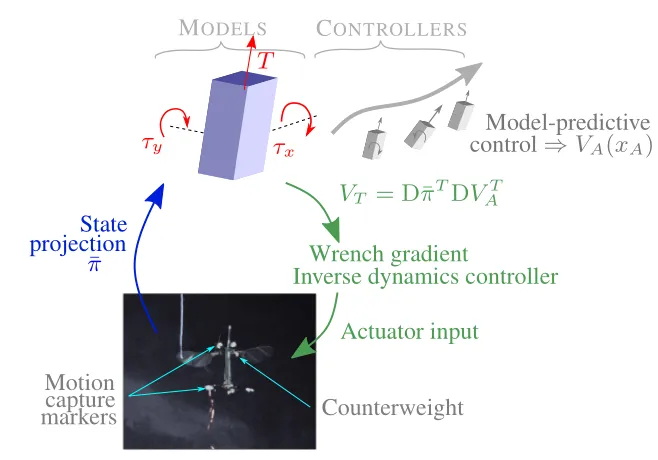
Hierarchical MPC for RoboBee [@de2022efficient]
Hierarchical MPC for RoboBee (De et al., 2022)
  • MPC (higher-level): online generalization
  • Inverse Dynamics (lower-level): model-robustness, embodiment transfer

RL Action Primitive (Fixed Interface)
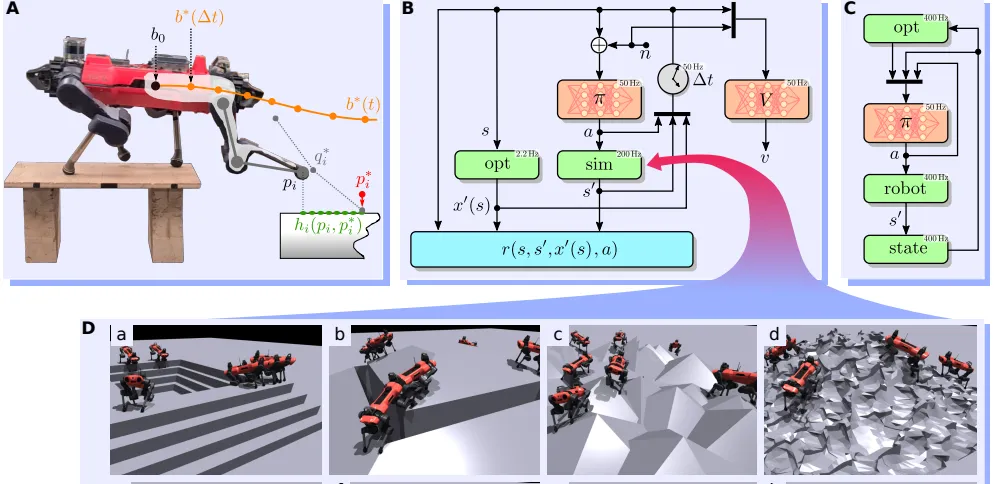
Traj opt -> RL tracking -- Deep Tracking control (DTC) traj opt -> RL tracking [@jenelten2024dtc]
Traj opt -> RL tracking – Deep Tracking control (DTC) traj opt -> RL tracking (Jenelten et al., 2024)
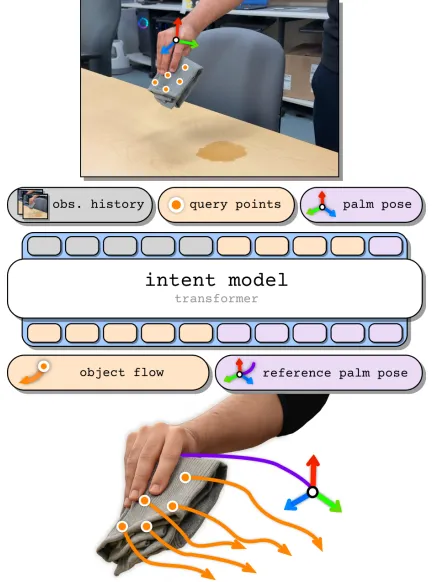
Intent model -> RL tracking -- LUCID  [@gupta2026lucidlearningembodimentagnosticintent]
Intent model -> RL tracking – LUCID (Gupta et al., 2026)
  • RL can allow for faster synthesis of robust primitives when sufficiently specified
  • Dynamical, embodied, robust, though not guaranteed to be composable

Symbolic Planning for Leaping

  • Contact-heavy planning with torque control --> difficult online (Posa et al., 2014)
  • Characterize “letters” --> cheap online planning
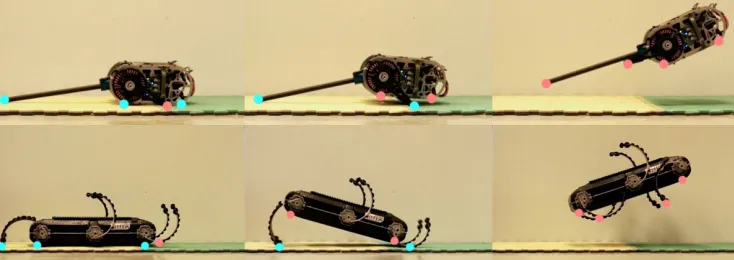
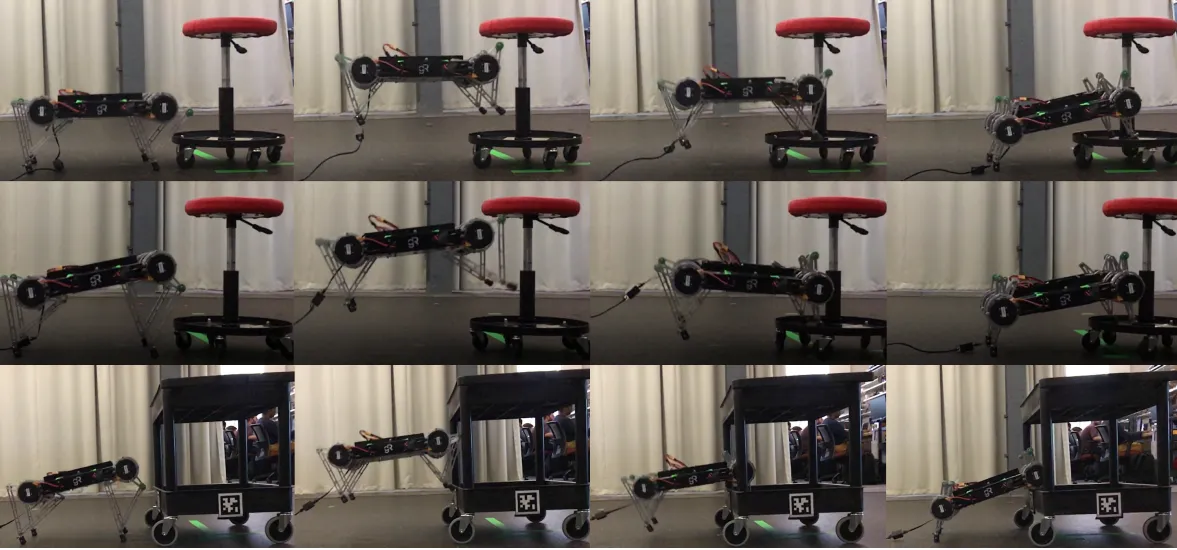
Leaping behaviors built by composing sequences of hardcoded transitions [@brill2015tail]
Leaping behaviors built by composing sequences of hardcoded transitions (Brill et al., 2015)
Ground reaction complex (GRC)

Symbolic Planning for Manipulation

  • Contact-heavy planning with torque control --> difficult online (Mordatch et al., 2012)
  • Characterize “letters” --> cheap online planning
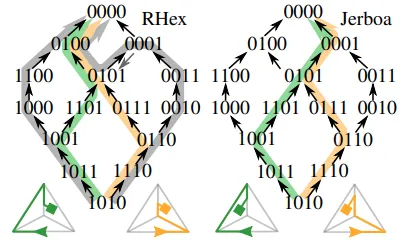
What Have We Built So Far?

Action primitives that are...
Dynamic

Hopping, leaping, running, etc.; utilizing passive dynamics

Generative

Online recombination sequentially, parallelly

Efficient

Traj opt -> cheap online discrete symbol-space planning

Transferable

Robust to modeling errors; swappable body params

We (still) need an architecture capable of synthesizing, as well as autonomously tasking and composing primitives

Open Questions

Best of Both Worlds: Semantic FM + Dynamical Primitives

Foundation model (high-level)

Semantic “common sense”, task decomposition, perception

↓
Coarse action head (low-level)
  • Online generation of novel behaviors via primitive composition
  • Few-shot learning via symbolic planning or online RL over primitives
  • Dynamic stability, robustness, cross-embodiment transfer

Joint actions to latent interfaces
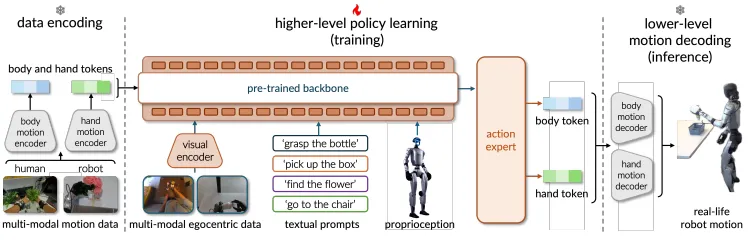
VioLA hierarchical connection of a "frozen encoder" with a latent (designed) interface [@albaba2026viola]. Zero-shot locomotion success 100%, versus 16.7% for GR00T N1.7.
VioLA hierarchical connection of a “frozen encoder” with a latent (designed) interface (Albaba et al., 2026). Zero-shot locomotion success 100%, versus 16.7% for GR00T N1.7.

Open challenge: Aligning discrete/latent foundation model interfaces with formal composability when not trained end-to-end

Formal Composability of RL Primitives
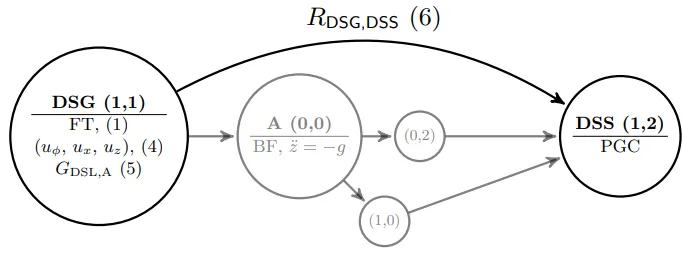
Sequential composition formalism provides a preimage condition for composing controllers [@burridge1999sequential]
Sequential composition formalism provides a preimage condition for composing controllers (Burridge et al., 1999)
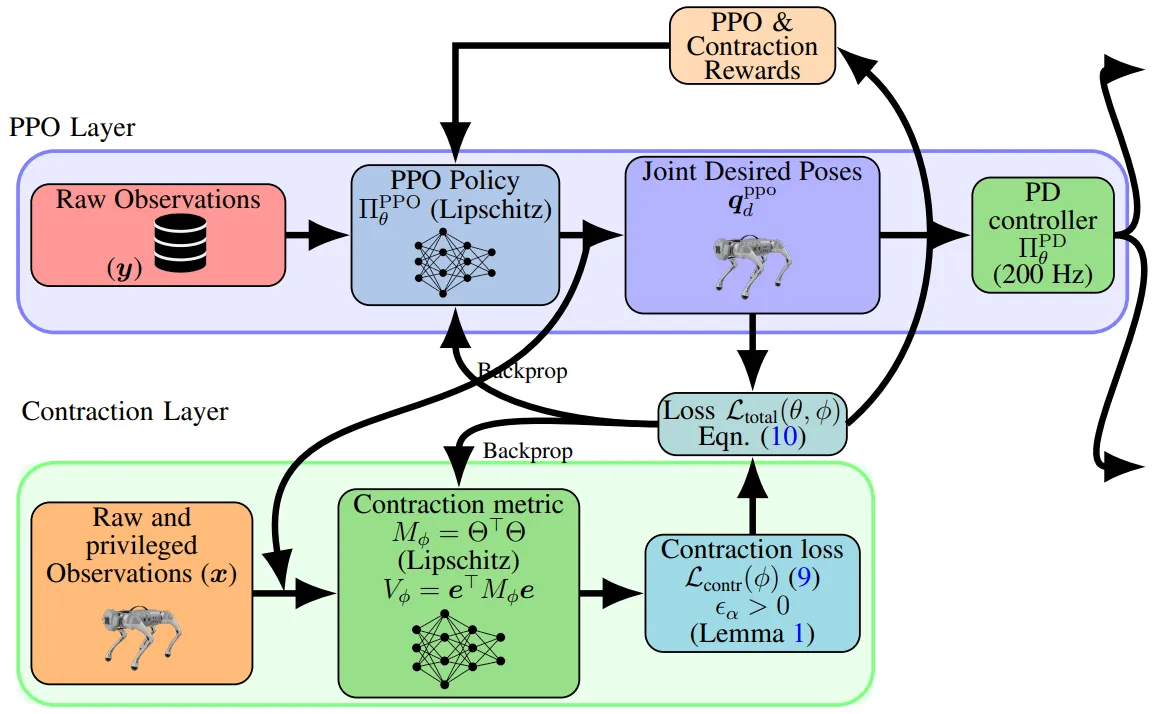
ContractionPPO adds a contraction loss during RL training for robustness [@zinage2026contractionppo]
ContractionPPO adds a contraction loss during RL training for robustness (Zinage et al., 2026)

Idea: Add composability criteria to training loss for guaranteed online recombination

Generalization’s Computational Footprint

Optimization-based \min J(x, u)~~\text{s.t.} ~ g(x) = 0 RL a = \pi_\theta(s)
Online generalization Strong Weak
Computational requirement High Low
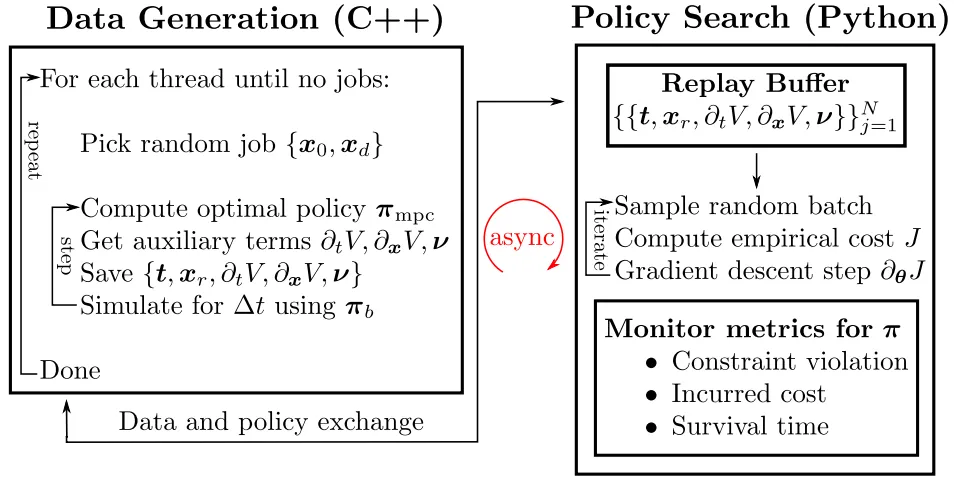
MPC-Net "compiles" an MPC controller [@reske2021imitation]
MPC-Net “compiles” an MPC controller (Reske et al., 2021)

Regularity vs. Co-Design Potential

DNN regularity allows codesign
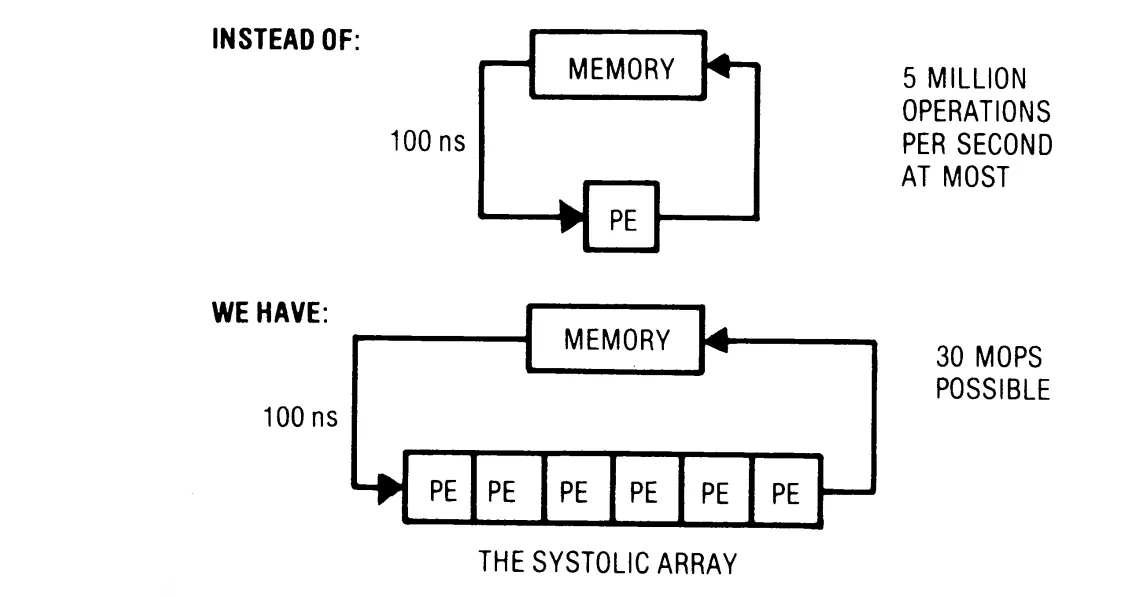
Systolic arrays make DNN computation faster and more efficient [@kung1979systolic]
Systolic arrays make DNN computation faster and more efficient (Kung et al., 1979)

ASICs: performant, but inflexible

Robotics codesign successes: Navion [@suleiman2019navion], Robomorphic ASIC [@neuman2021robomorphic]
Robotics codesign successes: Navion (Suleiman et al., 2019), Robomorphic ASIC (Neuman et al., 2021)

Huge perf/eff gains (e.g. 2 mW VIO; 40× dynamics grad), but inflexible

Computer Architecture Affects Throughput and Energy

Von Neumann vs. Dataflow

  • Stored-program bottleneck: Data movement costs 10× (SRAM) to >150× (DRAM) more energy than arithmetic (Horowitz, 2014)
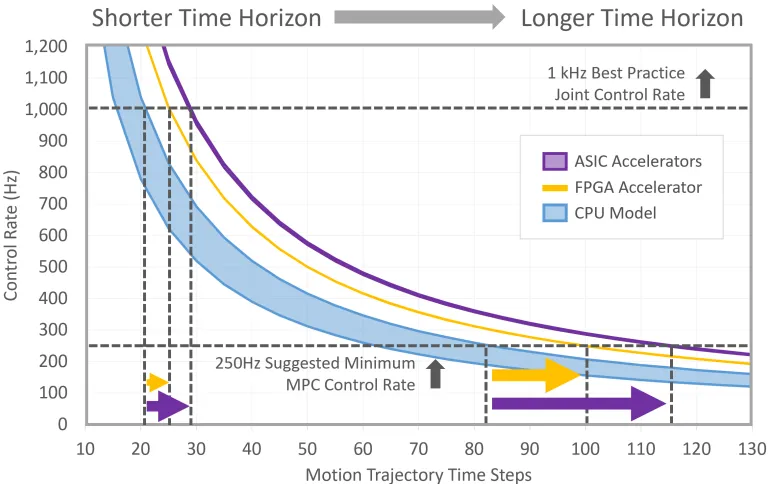
  • MPC has low arithmetic intensity: Dominated by memory movement (e.g., TinyMPC (Nguyen et al., 2024))
  • Data-flow and domain flow: Organize computation around data movement (Omtzigt, 1990)

Flexible dataflow hardware is emerging
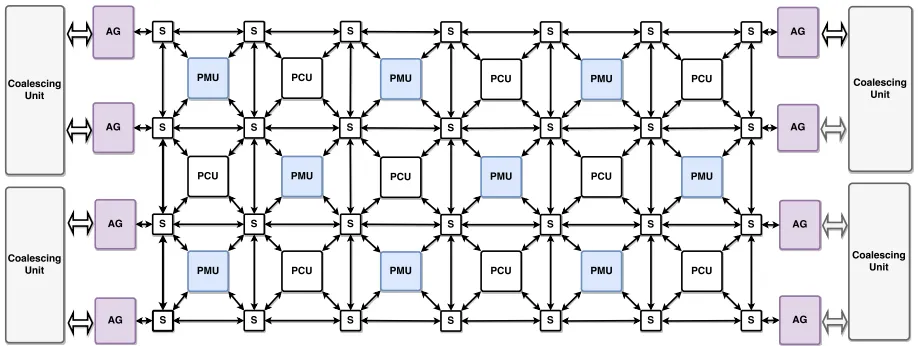
Plasticine [@prabhakar2017plasticine], SambaNova RDU compile whole compute graphs into spatial pipelines on-chip (up to 77× perf/W)
Plasticine (Prabhakar et al., 2017), SambaNova RDU compile whole compute graphs into spatial pipelines on-chip (up to 77× perf/W)

The opportunity for robotics:

  • Systolic arrays (Kung et al., 1979) unlocked DNNs
  • Domain-flow could unlock optimization-based control

Conclusion

What we want
  • Robots that exhibit dynamical stability and robustness
  • Can generate new behaviors online
  • Generalize to new tasks and environments
What we have so far
  • Ways to hand-craft composable dynamical primitives from templates
  • Ways to build RL primitives that may not be composable
What we need to build
  • Architectures that can flexibly and easily synthesize composable primitives
  • Architectures that can compose them online to generate new behaviors

Thank you!

More information: avikde.github.io

References (1/9)

Ahn, M., Brohan, A., Brown, N., Chebotar, Y., Cortes, O., et al. “Do as i can, not as i say: Grounding language in robotic affordances.” arXiv preprint arXiv:2204.01691, 2022.
Albaba, M., Bei\sswenger, J., Manasyan, A., Marta, D., Black, M., et al. “VioLA: Learning Generalist Humanoid Control Policies from Human Data.” arXiv preprint arXiv:2610.12435, 2026.
Beal, D., Hover, F., Triantafyllou, M., Liao, J., and Lauder, G. “Passive propulsion in vortex wakes.” Journal of fluid mechanics, 2006.
Blickhan, R., and Full, R. “Similarity in multilegged locomotion: bouncing like a monopode.” Journal of Comparative Physiology A, 1993.
Bravo-Palacios, G., Zhang, J., Pestrikov, Z., Plancher, B., and Lew, T. “TurboMPC: Fast, Scalable, and Differentiable Model Predictive Control on the GPU.” arXiv preprint arXiv:2606.24039, 2026.
Brill, A., De, A., Johnson, A., and Koditschek, D. “Tail-assisted rigid and compliant legged leaping.” 2015 IEEE/RSJ International Conference on Intelligent Robots and Systems (IROS), 2015.
Brooks, R. “Intelligence without representation.” Artificial intelligence, 1991.
Buchanan, S., Pai, D., Wang, P., and Ma, Y. “Principles and Practice of Deep Representation Learning: or a Mathematical Theory of Memory.” arXiv preprint arXiv:2606.06624, 2026.

References (2/9)

Burridge, R., Rizzi, A., and Koditschek, D. “Sequential composition of dynamically dexterous robot behaviors.” The International Journal of Robotics Research, 1999.
Capsi-Morales, P., Barsakcioglu, D., Catalano, M., Grioli, G., Bicchi, A., et al. “Merging motoneuron and postural synergies in prosthetic hand design for natural bionic interfacing.” Science Robotics, 2025.
Clark, A., and others. “Whatever next? Predictive brains, situated agents, and the future of cognitive science.” Behavioral and brain sciences, 2013.
De, A., and Koditschek, D. “Parallel composition of templates for tail-energized planar hopping.” 2015 IEEE International Conference on Robotics and Automation (ICRA), 2015.
De, A., and Koditschek, D. “Vertical hopper compositions for preflexive and feedback-stabilized quadrupedal bounding, pacing, pronking, and trotting.” The International Journal of Robotics Research, 2018.
De, A., Burden, S., and Koditschek, D. “A hybrid dynamical extension of averaging and its application to the analysis of legged gait stability.” The International Journal of Robotics Research, 2018.
De, A., McGill, R., and Wood, R. “An efficient, modular controller for flapping flight composing model-based and model-free components.” The International Journal of Robotics Research, 2022.
De, A., Topping, T., Caporale, J., and Koditschek, D. “Mode-reactive template-based control in planar legged robots.” IEEE Access, 2022.

References (3/9)

Dorovatas, V., Schwerin, M., Bagdanov, A., Caccia, L., Carta, A., et al. “Position: Modular Memory is the Key to Continual Learning Agents.” arXiv preprint arXiv:2603.01761, 2026.
Durr, P., El Gheche, M., Maeda, G., Mukai, N., Takahashi, N., et al. “Outplaying elite table tennis players with an autonomous robot.” Nature, 2026.
EKA-Robotics. “EKA Robotics.” 2026. [link]
Friston, K. “The free-energy principle: a unified brain theory?.” Nature reviews neuroscience, 2010.
Full, R., and Koditschek, D. “Templates and anchors: neuromechanical hypotheses of legged locomotion on land.” Journal of experimental biology, 1999.
Gupta, H., Shi, G., and Yuan, W. “LUCID: Learning Embodiment-Agnostic Intent Models from Unstructured Human Videos for Scalable Dexterous Robot Skill Acquisition.” 2026. [link]
Haarnoja, T., Ha, S., Zhou, A., Tan, J., Tucker, G., et al. “Learning to walk via deep reinforcement learning.” arXiv preprint arXiv:1812.11103, 2018.
He, C., Liu, X., Camps, G., Bruno, J., Sartoretti, G., et al. “Demystifying robot diffusion policies: Action memorization and a simple lookup table alternative.” The Fourteenth International Conference on Learning Representations, 2026.

References (4/9)

Horowitz, M. “Computing's energy problem (and what we can do about it).” 2014 IEEE International Solid-State Circuits Conference Digest of Technical Papers (ISSCC), 2014.
Ibarz, J., Tan, J., Finn, C., Kalakrishnan, M., Pastor, P., et al. “How to train your robot with deep reinforcement learning: lessons we have learned.” The International Journal of Robotics Research, 2021.
Intelligence, P., Ai, B., Amin, A., Aniceto, R., Balakrishna, A., et al. “pi-0.7: a Steerable Generalist Robotic Foundation Model with Emergent Capabilities.” arXiv preprint arXiv:2604.15483, 2026.
Jenelten, F., He, J., Farshidian, F., and Hutter, M. “DTC: Deep tracking control.” Science Robotics, 2024.
Jouppi, N., Young, C., Patil, N., Patterson, D., Agrawal, G., et al. “In-datacenter performance analysis of a tensor processing unit.” Proceedings of the 44th Annual International Symposium on Computer Architecture (ISCA), 2017.
Khadiv, M., Meduri, A., Zhu, H., Righetti, L., and Sch\""olkopf, B. “Learning Locomotion Skills from MPC in Sensor Space.” Proceedings of The 5th Annual Learning for Dynamics and Control Conference (L4DC), 2023.
Kirk, R., Zhang, A., Grefenstette, E., and Rockt\""aschel, T. “A survey of zero-shot generalisation in deep reinforcement learning.” Journal of Artificial Intelligence Research, 2023.
Konidaris, G., Kuindersma, S., Grupen, R., and Barto, A. “Robot learning from demonstration by constructing skill trees.” The International Journal of Robotics Research, 2012.

References (5/9)

Kung, H., Leiserson, C., and others. “Systolic arrays (for VLSI).” Sparse Matrix Proceedings 1978, 1979.
Lake, B., and Baroni, M. “Generalization without systematicity: On the compositional skills of sequence-to-sequence recurrent networks.” International conference on machine learning, 2018.
Lake, B., Ullman, T., Tenenbaum, J., and Gershman, S. “Building machines that learn and think like people.” Behavioral and Brain Sciences, 2017.
Legg, S., and Hutter, M. “Universal intelligence: A definition of machine intelligence.” Minds and machines, 2007.
Li, G., and Hayashibe, M. “Motor synergy and energy efficiency emerge in whole-body locomotion learning.” Scientific Reports, 2025.
Limisiewicz, T., Pagnoni, A., Iyer, S., Lewis, M., Mehta, S., et al. “Compute optimal tokenization.” arXiv preprint arXiv:2605.01188, 2026.
Liu, W., Chen, G., Hsu, J., Mao, J., and Wu, J. “Learning planning abstractions from language.” International Conference on Learning Representations, 2024.
Lupu, E., Xie, F., Preiss, J., Alindogan, J., Anderson, M., et al. “MAGIC VFM-meta-learning adaptation for ground interaction control with visual foundation models.” IEEE Transactions on Robotics, 2024.

References (6/9)

Merel, J., Botvinick, M., and Wayne, G. “Hierarchical motor control in mammals and machines.” Nature communications, 2019.
Mordatch, I., Popovi\''c, Z., and Todorov, E. “Contact-invariant optimization for hand manipulation.” Proceedings of the ACM SIGGRAPH/Eurographics symposium on computer animation, 2012.
Neuman, S., Plancher, B., Bourgeat, T., Tambe, T., Devadas, S., et al. “Robomorphic computing: a design methodology for domain-specific accelerators parameterized by robot morphology.” Proceedings of the 26th ACM International Conference on Architectural Support for Programming Languages and Operating Systems (ASPLOS), 2021.
Nguyen, K., Schoedel, S., Alavilli, A., Plancher, B., and Manchester, Z. “TinyMPC: Model-Predictive Control on Resource-Constrained Microcontrollers.” 2024 IEEE International Conference on Robotics and Automation (ICRA), 2024.
Omtzigt, E. “Domain flow and streaming architectures.” Proceedings of the International Conference on Application Specific Array Processors, 1990.
Pagnoni, A., Pasunuru, R., Rodriguez, P., Nguyen, J., Muller, B., et al. “Byte latent transformer: Patches scale better than tokens.” Proceedings of the 63rd Annual Meeting of the Association for Computational Linguistics (Volume 1: Long Papers), 2025.
Peng, X., and Van De Panne, M. “Learning locomotion skills using deeprl: Does the choice of action space matter?.” Proceedings of the ACM SIGGRAPH/Eurographics Symposium on Computer Animation, 2017.

References (7/9)

Plancher, B., and Kuindersma, S. “A performance analysis of parallel differential dynamic programming on a GPU.” International Workshop on the Algorithmic Foundations of Robotics, 2018.
Posa, M., Cantu, C., and Tedrake, R. “A direct method for trajectory optimization of rigid bodies through contact.” The International Journal of Robotics Research, 2014.
Prabhakar, R., Zhang, Y., Koeplinger, D., Feldman, M., Zhao, T., et al. “Plasticine: A reconfigurable architecture for parallel patterns.” Proceedings of the 44th Annual International Symposium on Computer Architecture (ISCA), 2017.
Raibert, M. “Legged robots that balance.” MIT press, 1986.
Reske, A., Carius, J., Ma, Y., Farshidian, F., and Hutter, M. “Imitation Learning from MPC for Quadrupedal Multi-Gait Control.” 2021 IEEE International Conference on Robotics and Automation (ICRA), 2021.
Shamsah, A., De, A., and Koditschek, D. “Analytically-guided design of a tailed bipedal hopping robot.” 2018 IEEE/RSJ International Conference on Intelligent Robots and Systems (IROS), 2018.
Shannon, C. “Prediction and entropy of printed English.” Bell system technical journal, 1951.
Sleiman, J., Li, H., Adu-Bredu, A., Deits, R., Kumar, A., et al. “ZEST: Zero-shot embodied skill transfer for athletic robot control.” Science Robotics, 2026.

References (8/9)

Suleiman, A., Zhang, Z., Carlone, L., Karaman, S., and Sze, V. “Navion: A 2-mw fully integrated real-time visual-inertial odometry accelerator for autonomous navigation of nano drones.” IEEE Journal of Solid-State Circuits, 2019.
Sutton, R. “The bitter lesson.” Incomplete Ideas (blog), 2019.
Tanzarella, S., Muceli, S., Santello, M., and Farina, D. “Synergistic organization of neural inputs from spinal motor neurons to extrinsic and intrinsic hand muscles.” The Journal of Neuroscience, 2021.
Topping, T., Vasilopoulos, V., De, A., and Koditschek, D. “Composition of templates for transitional pedipulation behaviors.” The International Symposium of Robotics Research, 2019.
Udandarao, V., Prabhu, A., Ghosh, A., Sharma, Y., Torr, P., et al. “No ``Zero-Shot'' Without Exponential Data: Pretraining Concept Frequency Determines Multimodal Model Performance.” Advances in Neural Information Processing Systems (NeurIPS), 2024.
Westervelt, E., Grizzle, J., and Koditschek, D. “Hybrid zero dynamics of planar biped walkers.” IEEE transactions on automatic control, 2003.
Zador, A. “A critique of pure learning and what artificial neural networks can learn from animal brains.” Nature communications, 2019.
Zahavy, T. “Position: LLMs can't jump.” Forty-third International Conference on Machine Learning Position Paper Track, 2026.

References (9/9)

Zinage, V., Harutyunyan, N., Verheyden, E., Hadaegh, F., and Chung, S. “ContractionPPO: Certified Reinforcement Learning via Differentiable Contraction Layers.” IEEE Robotics and Automation Letters, 2026.